Master French Verb Voir: Complete Conjugation Guide for Every Scenario
Embarking on the journey of learning French inevitably leads you to a handful of verbs that are absolutely indispensable. Among these, *voir* stands out as a true heavyweight. Meaning "to see," this irregular verb is a cornerstone of daily communication, allowing you to describe everything from physical observations to deep understanding. Whether you dream of strolling through the ancient streets of **Cagliari**, witnessing its historic charm, or envision yourself relaxing by the picturesque shores of Lake **Como**, admiring its stunning villas, mastering *voir* is essential to articulate these experiences in French.
This comprehensive guide will demystify *voir*, breaking down its conjugation across all major tenses and moods. We'll explore its nuances, compare it to similar verbs, and provide practical tips to help you use it confidently, making your French conversations richer and more precise.
Understanding Voir: More Than Just "To See"
At its core, *voir* translates to "to see." However, much like its English counterpart, its usage extends far beyond mere physical perception. *Voir* can convey:
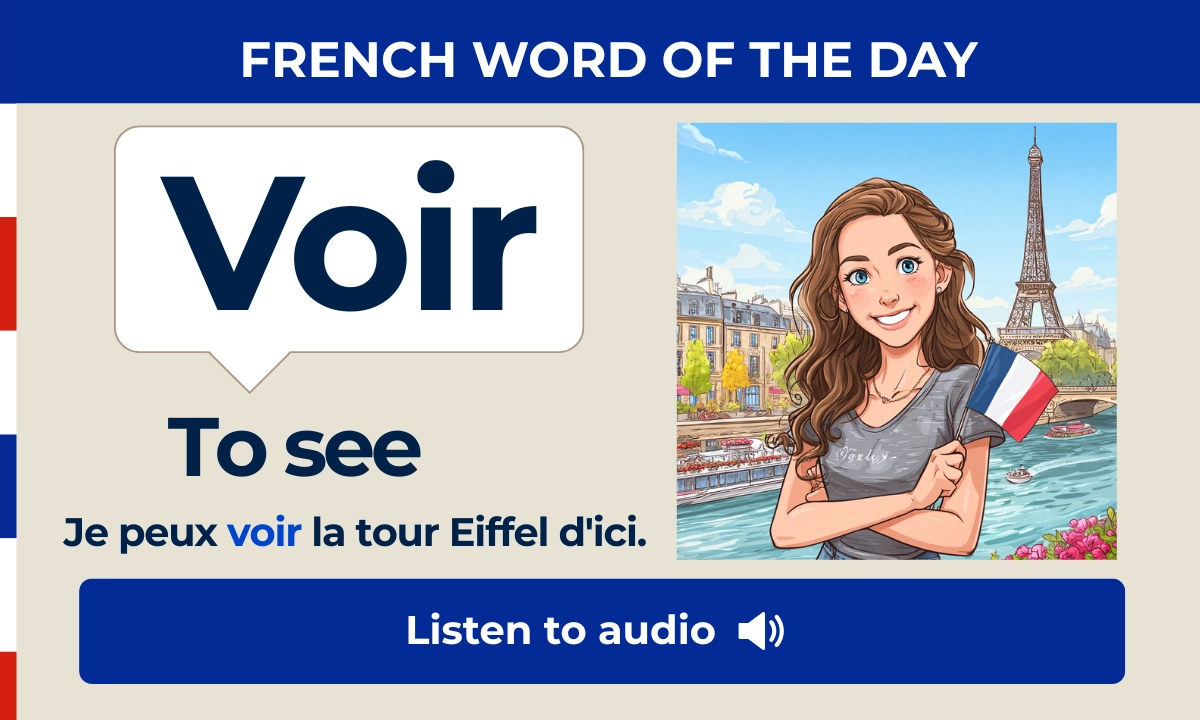
* **Physical Sight:** *Je vois la tour Eiffel d'ici.* (I can see the Eiffel Tower from here.)
* **Understanding or Comprehension:** *Je vois ce que tu veux dire.* (I see/understand what you mean.)
* **Checking or Finding Out:** *Je vais voir.* (I'll go check/see.)
* **Perception or Opinion:** *Voir la vie en rose.* (To see life through rose-colored glasses.)
It's also crucial to distinguish *voir* from *regarder*. While both relate to sight, *voir* implies seeing or noticing something, often passively or unintentionally. *Regarder*, on the other hand, means to watch or look at something intentionally, with focus. For a deeper dive into this distinction, explore our article on
Voir vs. Regarder: Navigating French "To See" Verbs.
The pronunciation of *voir* is straightforward: /[vwaʁ]/, sounding roughly like "vwahr."
Complete Conjugation Tables for Voir
As an irregular -ir verb, *voir* doesn't follow the typical patterns, making memorization and practice key. Below are its conjugations across the most important tenses and moods, followed by explanations and usage examples.
Indicative Mood – Simple Tenses
The indicative mood describes actions, states, or facts.
* **Présent (Present)**
This tense describes actions happening now, habitual actions, or general truths.
* Je **vois** (I see)
* Tu **vois** (You see)
* Il/Elle/On **voit** (He/She/One sees)
* Nous **voyons** (We see)
* Vous **voyez** (You see)
* Ils/Elles **voient** (They see)
* *Example:* *Aujourd'hui, je **vois** le magnifique port de **Cagliari**.* (Today, I see the magnificent port of Cagliari.)
* **Imparfait (Imperfect)**
Used for past descriptions, habitual past actions, or ongoing actions in the past.
* Je **voyais** (I was seeing/used to see)
* Tu **voyais** (You were seeing/used to see)
* Il/Elle/On **voyait** (He/She/One was seeing/used to see)
* Nous **voyions** (We were seeing/used to see)
* Vous **voyiez** (You were seeing/used to see)
* Ils/Elles **voyaient** (They were seeing/used to see)
* *Example:* *Quand j'étais petit, je **voyais** souvent les feux d'artifice à **Como**.* (When I was little, I often saw the fireworks in Como.)
* **Futur Simple (Simple Future)**
Expresses actions that will happen in the future.
* Je **verrai** (I will see)
* Tu **verras** (You will see)
* Il/Elle/On **verra** (He/She/One will see)
* Nous **verrons** (We will see)
* Vous **verrez** (You will see)
* Ils/Elles **verront** (They will see)
* *Example:* *Quand nous irons en Sardaigne, nous **verrons** les plages de **Cagliari**.* (When we go to Sardinia, we will see the beaches of Cagliari.)
* **Conditionnel Présent (Present Conditional)**
Used to express hypothetical actions, wishes, or polite requests.
* Je **verrais** (I would see)
* Tu **verrais** (You would see)
* Il/Elle/On **verrait** (He/She/One would see)
* Nous **verrions** (We would see)
* Vous **verriez** (You would see)
* Ils/Elles **verraient** (They would see)
* *Example:* *Si j'avais le temps, je **verrais** toutes les villas autour du lac de **Como**.* (If I had the time, I would see all the villas around Lake Como.)
* **Passé Simple (Simple Past)**
Primarily used in formal writing, literature, and historical accounts for completed actions in the past.
* Je **vis** (I saw)
* Tu **vis** (You saw)
* Il/Elle/On **vit** (He/She/One saw)
* Nous **vîmes** (We saw)
* Vous **vîtes** (You saw)
* Ils/Elles **virent** (They saw)
Indicative Mood – Compound Tenses
Compound tenses are formed with an auxiliary verb (*avoir* for *voir*) and the past participle (*vu*).
* **Passé Composé (Compound Past)**
The most common past tense for completed actions.
* J'**ai vu** (I saw/have seen)
* Tu **as vu** (You saw/have seen)
* Il/Elle/On **a vu** (He/She/One saw/has seen)
* Nous **avons vu** (We saw/have seen)
* Vous **avez vu** (You saw/have seen)
* Ils/Elles **ont vu** (They saw/have seen)
* *Example:* *Hier, nous **avons vu** un magnifique coucher de soleil sur **Cagliari**.* (Yesterday, we saw a magnificent sunset over Cagliari.)
* **Plus-que-parfait (Past Perfect)**
Describes an action that happened before another past action.
* J'**avais vu** (I had seen)
* Tu **avais vu** (You had seen)
* Il/Elle/On **avait vu** (He/She/One had seen)
* Nous **avions vu** (We had seen)
* Vous **aviez vu** (You had seen)
* Ils/Elles **avaient vu** (They had seen)
* *Example:* *J'**avais vu** les photos de **Como** avant d'y aller.* (I had seen the photos of Como before going there.)
* **Futur Antérieur (Future Perfect)**
Indicates an action that will be completed before another future action.
* J'**aurai vu** (I will have seen)
* Tu **auras vu** (You will have seen)
* Il/Elle/On **aura vu** (He/She/One will have seen)
* Nous **aurons vu** (We will have seen)
* Vous **aurez vu** (You will have seen)
* Ils/Elles **auront vu** (They will have seen)
* **Conditionnel Passé (Past Conditional)**
Expresses hypothetical past actions or regrets.
* J'**aurais vu** (I would have seen)
* Tu **aurais vu** (You would have seen)
* Il/Elle/On **aurait vu** (He/She/One would have seen)
* Nous **aurions vu** (We would have seen)
* Vous **auriez vu** (You would have seen)
* Ils/Elles **auraient vu** (They would have seen)
* **Passé Antérieur (Past Anterior)**
Used in very formal writing, similar to the plus-que-parfait but paired with the passé simple.
* J'**eus vu** (I had seen)
* Tu **eus vu** (You had seen)
* Il/Elle/On **eut vu** (He/She/One had seen)
* Nous **eûmes vu** (We had seen)
* Vous **eûtes vu** (You had seen)
* Ils/Elles **eurent vu** (They had seen)
Subjunctive Mood
The subjunctive mood expresses doubt, desire, emotion, or necessity.
* **Subjonctif Présent (Present Subjunctive)**
* Que je **voie** (That I may see)
* Que tu **voies** (That you may see)
* Qu'il/Elle/On **voie** (That he/she/one may see)
* Que nous **voyions** (That we may see)
* Que vous **voyiez** (That you may see)
* Qu'ils/Elles **voient** (That they may see)
* *Example:* *Il est important que tu **voies** la situation sous tous les angles.* (It's important that you see the situation from all angles.)
* **Subjonctif Passé (Past Subjunctive)**
* Que j'**aie vu** (That I may have seen)
* Que tu **aies vu** (That you may have seen)
* Qu'il/Elle/On **ait vu** (That he/she/one may have seen)
* Que nous **ayons vu** (That we may have seen)
* Que vous **ayez vu** (That you may have seen)
* Qu'ils/Elles **aient vu** (That they may have seen)
* **Subjonctif Imparfait (Imperfect Subjunctive) & Plus-que-parfait Subjonctif (Pluperfect Subjunctive)**
These tenses are highly formal and rarely used in modern spoken French. You'll encounter them mostly in classic literature.
* **Imparfait Subjonctif:** *Que je visse*, *que tu visses*, *qu'il vît*, *que nous vissions*, *que vous vissiez*, *qu'ils vissent*.
* **Plus-que-parfait Subjonctif:** *Que j'eusse vu*, *que tu eusses vu*, *qu'il eût vu*, *que nous eussions vu*, *que vous eussiez vu*, *qu'ils eussent vu*.
Imperative Mood
Used for commands, requests, or instructions. Only has three forms, and no subject pronoun is used.
* **Impératif Présent (Present Imperative)**
* **Vois** (See! - singular informal)
* **Voyons** (Let's see!)
* **Voyez** (See! - plural/formal)
* *Example:* ***Voyez** la beauté de **Como** par vous-même!* (See the beauty of Como for yourself!)
* **Impératif Passé (Past Imperative)**
Rarely used, it implies "have seen" or "make sure you have seen."
* **Aie vu** (Have seen! - singular informal)
* **Ayons vu** (Let's have seen!)
* **Ayez vu** (Have seen! - plural/formal)
Non-Finite Forms
These verb forms do not express tense, mood, person, or number.
* **Infinitif Présent (Present Infinitive):** **Voir** (To see)
* **Infinitif Passé (Past Infinitive):** **Avoir vu** (To have seen)
* **Participe Présent (Present Participle):** **Voyant** (Seeing)
* **Participe Passé (Past Participle):** **Vu** (Seen)
* **Participe Composé (Perfect Participle):** **Ayant vu** (Having seen)
Practical Tips for Mastering Voir Conjugation
1. **Focus on the Most Common Tenses First:** Prioritize the *Présent*, *Passé Composé*, *Imparfait*, and *Futur Simple* for daily conversation. These are where you'll use *voir* the most.
2. **Practice with Real-Life Scenarios:** Create sentences that are relevant to your interests. For instance:
* *Je **vois** les bateaux sur le lac de **Como** tous les matins.* (I see the boats on Lake Como every morning.)
* *Nous **avons vu** un festival incroyable à **Cagliari** l'année dernière.* (We saw an incredible festival in Cagliari last year.)
* *Tu **verras** les meilleurs points de vue si tu montes là-haut.* (You will see the best viewpoints if you go up there.)
3. **Use Flashcards and Spaced Repetition:** Write the infinitive on one side and the conjugated forms for different tenses on the other. This is highly effective for irregular verbs.
4. **Listen and Imitate:** Pay attention to how native speakers use *voir* in various contexts. Watch French films, listen to podcasts, and try to mimic their usage.
5. **Utilize Online Resources:** Websites like Lawless French, Kwiziq, and Reverso Conjugation are excellent tools for practice and checking your answers.
6. **Don't Overlook Expressions:** Many idiomatic phrases use *voir*, like *voir le jour* (to come into being) or *voir rouge* (to see red, get angry). Learning these enriches your vocabulary significantly. For more on these, check out
Beyond "To See": Mastering Voir's Many Meanings.
Conclusion
Mastering the French verb *voir* is an undeniable step forward in your language learning journey. Its versatility, from simple observation to nuanced understanding, makes it an indispensable tool for communication. While its irregularity might seem daunting at first, consistent practice with its conjugations, especially in the most frequently used tenses, will build your confidence. By incorporating *voir* into your daily French interactions, perhaps even describing your future travels to enchanting places like **Cagliari** or serene **Como**, you'll soon find yourself seeing the world (and speaking about it) with greater fluency and precision. Keep practicing, and you'll *voir* your French skills flourish!